
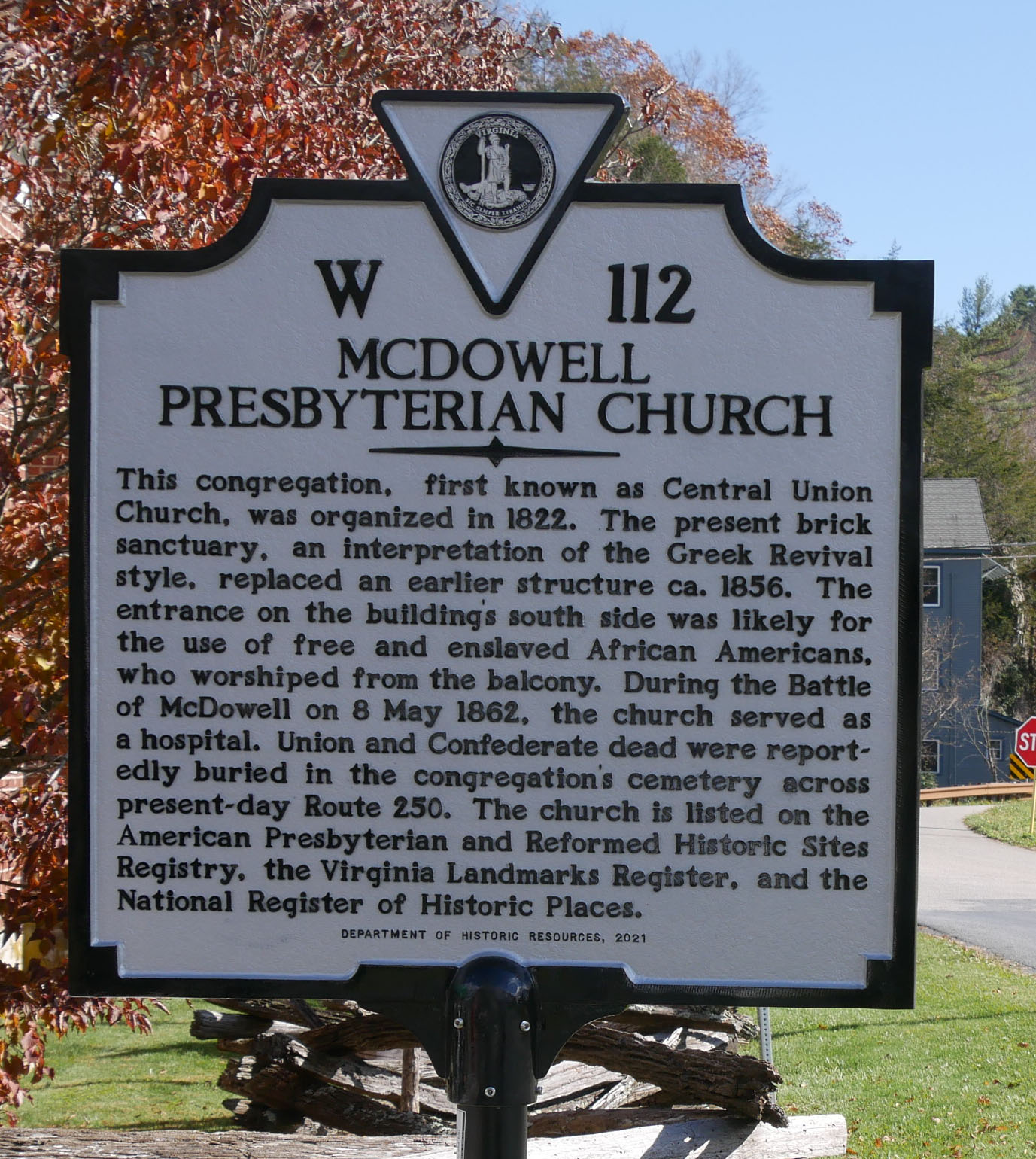
"The preaching of the gospel, having been attended with pleasing success on the Bullpasture River in the County of Pendleton, and there being no Presbyterian Church organized [here]...we on this date agree... and voluntarily consent, united together as a Christian Society and formed into a regular organized church to be known as the Central Union Church."
With these words is recorded the beginning of the McDowell Presbyterian Church on November 2, 1822, though the seeds of the church were planted years earlier.
"There was no Highland County in 1818 when they started talking about this," explained Will Crisp, church member and local historian. "Highland in 1818 was part of Pendleton County in West Virginia and Bath County."
Crisp said community members put out calls for "subscriptions," meaning money to be donated to build a church beginning in 1818. The church was formally organized in 1822.
Records show that from 1778 worship services were held in homes along the Bullpasture River, and that the Rev. Moses Hoge preached the first Presbyterian sermon at the house of Mrs. Dunwoody.
The small body of 19 members accepted the form as prescribed by the Book of Confession of Faith. After being recognized by the Lexington Presbytery, Rev. John Hendren became the first Pastor, and James Curry and William (Ervine) Irvin were the first members elected to the Session.
Construction was started on a two room log church building near the present church in the village of Sugar Tree Grove (name changed to McDowell about 1850). Worship services were held in the sanctuary and the Session and Sunday school used the second room, sharing with local school children during the winter week days.
"The first building, most likely wooden, was on the banks of the Bull Pasture River to the east of the current Stonewall Ruritan Club building," Crisp said.
In 1856, Robert Singleton donated the land for the present church building and manse (pastor's house). Construction was immediately started. Bricks were molded and fired on the site, with the women taking an active part in the process. The manse was completed in 1879, with the Rev. Samuel McCune being the first resident.
Located on the turnpike between Monterey and Staunton, the church saw various uses during the Civil War. Much of the church's history is held in oral traditions. Troops were billeted there, and once the pews were burned for firewood. Many soldiers scratched the dates and their initials in the soft bricks, and many of the names are still visible today. Local historians cannot verify that the signatures were made by soldiers during the war, as it became a practice for soldiers and their family members to revisit sites from the Civil War in later years.
Two historical records prove the church was used as a hospital.
"Primary sources indicate that Union troops, wounded and sick, were housed in the church in 1862 prior to the Battle of McDowell," Crisp said, adding that Confederate troops most likely were treated there as well.
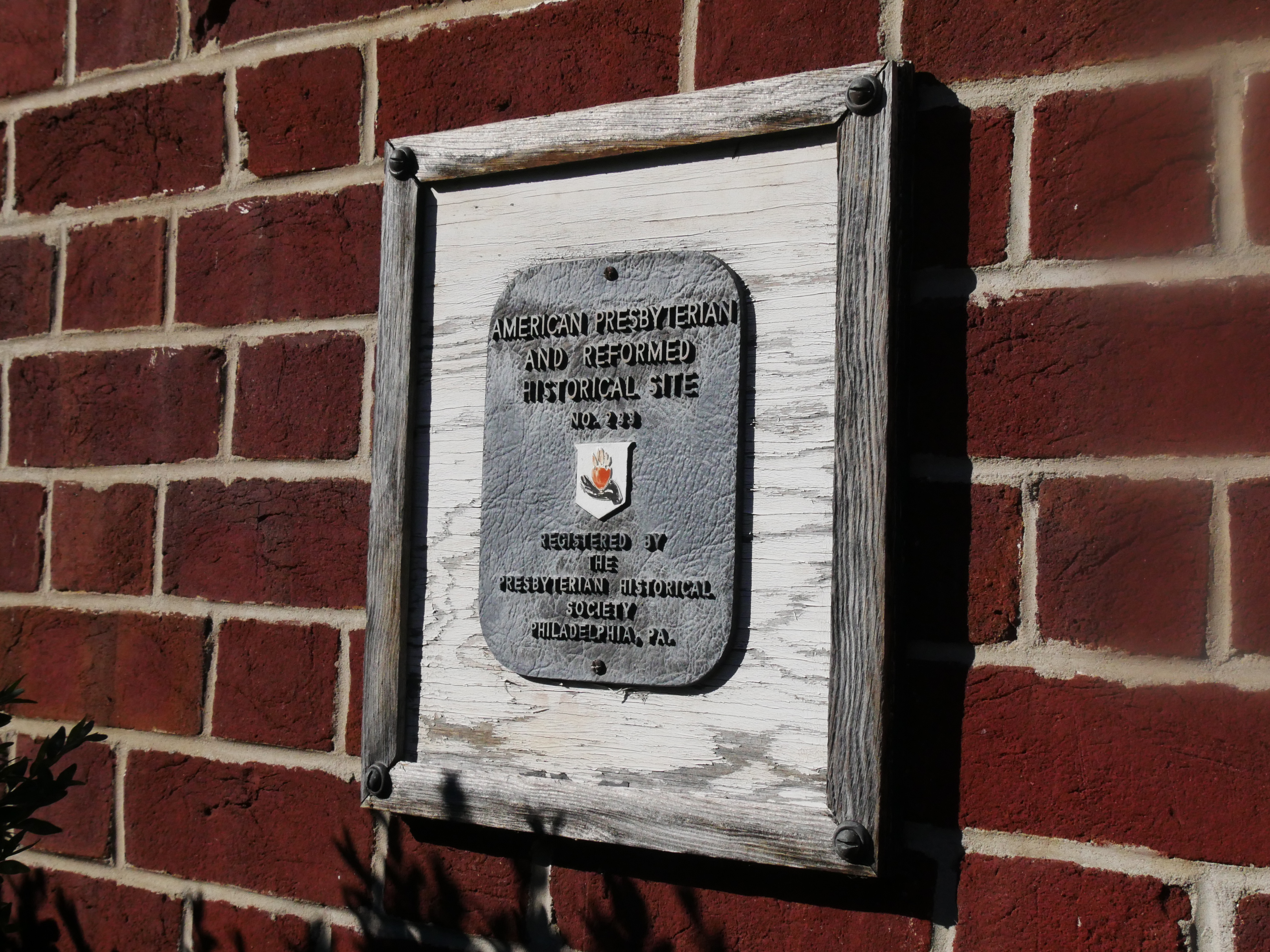
In May of 1862 General Stonewall Jackson and General Milroy fought an important battle in McDowell and the church was damaged by a cannonball. There were 754 reported casualties in this conflict. Many of the dead of both sides are buried in a mass grave across from the church.
In 1870, the church name was changed to McDowell Presbyterian Church, and it began to expand. Outposts and chapels were established at Palo Alto, Liberty, New Prospect, Bethlehem, Clover Creek and Head Waters. Of the chapels, only Clover Creek and Headwaters remain, though both are closed. Clover Creek continues to be maintained as an historic location, listed on the National Register of Historic places.
In 1950, a renovation and building program began, which resulted in new hardwood flooring, new pews, repointing of the brickwork, and the addition of Sunday School rooms, a kitchen and Fellowship Hall. The narthex and sanctuary remain much the same in appearance today as when first built, save for the stained glass windows and the replacement of the twin wood burning stoves with electric heat, and the installation of air conditioning. The small side entrance to the narthex and balcony are remaining relics of the days of slavery.
About 15 years ago, the church began construction of a community playground to serve all children and families in the area. Members donated funds for various pieces of equipment.
RD Robinson donated the Victorian playhouse to honor the memory of our beloved Sandra Robinson. Anna Maria Weierick donated the spinner tree swing.
The church raised money to purchase more equipment and a small picnic pavilion.
When the COVID19 pandemic hit, the church pivoted to online services and groups to continue worship, Bible study, and prayer in a safe manner. This allowed the church to reach a wider group of people, as individuals from around the county joined in virtual meetings. As the pandemic eased and in-person services resumed, the church chose to continue its virtual meetings as well.
McDowell Presbyterian Church has been a long-time supporter of the Highland County Food Pantry, donating food and other supplies. Church members volunteered with the food pantry. When the food pantry suddenly lost its home at another local church, members of the McDowell Presbyterian Church Spiritual Tea Group started Trunk-and-Eat as a way to practice gleaning and sharing from our own pantries with our neighbors in need.
McDowell Presbyterian Church also took over signing as the food pantry's legal entity while the food pantry worked toward obtaining non-profit status.
In 2022, McDowell Presbyterian Church celebrated its 200th birthday.
"With a 200-year legacy behind us, the question is always 'Where do we go from here?'" said Rev. Elizabeth Pyles, the church's pastor at that time.
"In our own time, in many ways, we're a grandma-and-grandpa church with a fair number of older members," Pyles said. "Asking ourselves what grandmas and grandpas do, we've concluded that we cherish the young and lavish them with gifts."
"In that spirit, we built the Community Playground (with plenty of help from the community), the Blessing Box, and continue missions to recycle batteries, support the Highland Food Pantry and collect shoes to support a mission of teaching women shoe repair to become self-sustaining business women in Kenya," Pyles said. "We also support KIVA, a micro-lending ministry, through which we've been able to loan thousands of dollars, usually no more than $500 at a time, to small businesses and efforts around the world."
"So, where do we go from here?" Pyles asked. "On the path God has set before us, we look to a future where others can join together in doing God's work, helping those in our own Highland community and around the world. We expand our reach with the gift of technology so that Bible studies, prayer groups, and online worship includes participants from around the world while small enough that we can be close together in our faith journey."
"This church began 200 years ago as a small mountain worshiping community of folks dedicated to worship and study and sharing," Pyles said. "It is our hope and prayer that 200 years from now, that legacy will continue."